
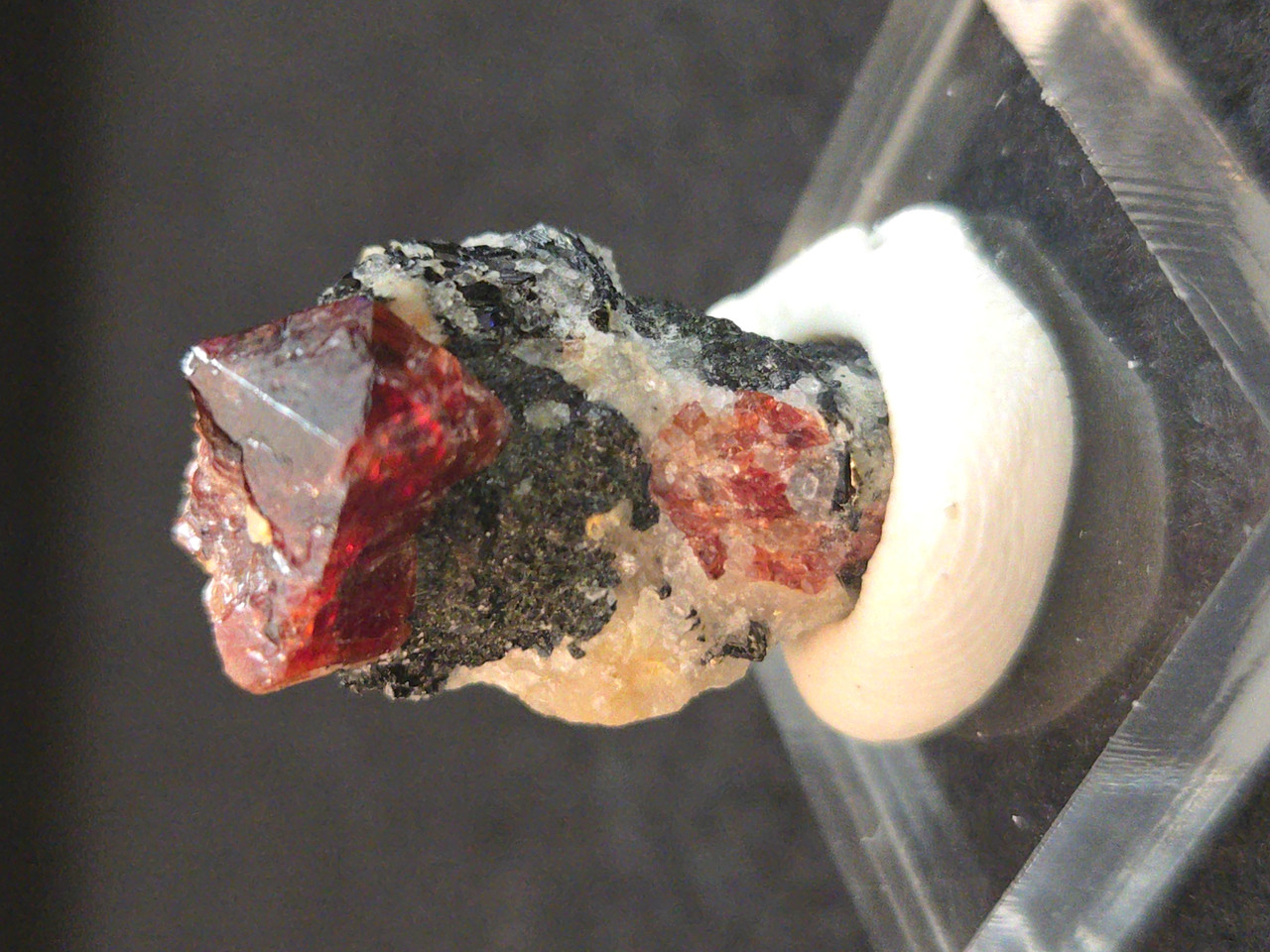
Zircon
Zircon crystals can be weakly radioactive because of a process called isomorphous substitution.
During the crystal's formation deep in the earth, trace amounts of radioactive Uranium and Thorium substitute for Zirconium within the crystal's molecular lattice. Because Uranium and Thorium ions share a similar size and electrical charge to Zirconium, they fit perfectly into the structure. Over time, the natural decay of these trapped trace elements emits very low levels of radiation, making the specimen weakly radioactive.

